
Diversity & Equity
Earth Day Marin, 2026 – Sunday, April 26, 2026 | 12 – 3pm | Mill Valley Community Center
Earth Day Marin 2026 Sunday, April 26, 2026 | 12 – 3pm | Mill Valley Community Center Celebrate Earth Day with us and help create a better world! Join us at Earth Day Marin, our 5th annual environmental celebration on Sunday, April 26, 2026, from 12 to 3pm, at the Mill Valley Community Center in…
Read MoreMarin IJ: Marin County Executive Derek Johnson is Proposing the County Create a New Strategic Plan, Its First Since 2001

When asked an open-ended question regarding the most serious issue facing Marin residents that county government could address, 31% cited housing, 17% homelessness, 11% traffic/congestion, 10% infrastructure/roads/street maintenance, 9% cost of living/inflation and 8% growth/development/overpopulation. “A notable share of respondents raised concerns about growth and overdevelopment, and I think this highlights an ongoing tension in Marin, strong concern about housing affordability, alongside a concern about how growth is managed,” said Linn Walsh, a deputy county executive. County supervisors’ current top six priorities are addressing affordable housing/homelessness, disaster preparedness, county infrastructure, advancing race equity, climate resiliency and community/economic vitality.
Read MorePlanting the Future: The Outdoor Art Club Gets Ready for Its Next Century

If you’ve walked past the shingled building tucked behind the wisteria-covered gate at 1 West Blithedale Avenue lately, you may have noticed something: the Outdoor Art Club has been busy. In fact, over the past three years, the Club — one of the Mill Valley Chamber of Commerce’s longtime members — has quietly undertaken a once-in-a-century effort to preserve and renew one of downtown’s architectural gems. The club has hosted generations of civic gatherings, performances, celebrations, and community conversations – but few people remember that in the 1930s it narrowly escaped demolition when the City proposed turning the site into a parking lot. Now, the Club’s members have once again rolled up their sleeves to care for this landmark — this time by ensuring it meets modern safety and health standards while preserving its historic character.
Read MoreCouncilmembers, Planning Commissioners, Staff and Residents Continue Their Efforts to Dive Deeply Into a Reconsidering of Up Dated Parking Regulations – MV Will Eliminate Parking Requirements for New Businesses Downtown
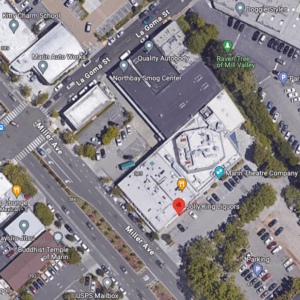
Councilmember Joachim mentioned possible underutilized parking lots, particularly the private lot adjacent to the Depot Plaza. “Requires a willing property owner,” she noted. “We do have these private lots that are underutilized. The discussion concluded until later in the fall, but teased the possibility of dealing with formula businesses by identifying businesses above the 5,000 foot threshold, which applies to the larger buildings that are part of the downtown core area – not Miller, not Safeway. You could apply for a conditional use permit to have no parking if you are doing a non-expansion renovation or change of use to a building that was more than 5000 sq feet.
Read MoreOne Year After Its Mill Valley Comeback, The Hivery Thrives as a Women-Fueled Hub for Community, Creativity, and Growth!

“This space is our comeback kid and a testament to the resilience of women-owned business. We fought for years to bring this concept back into a brick-and-mortar offering, and it took tenacity and courage to make that happen. We did this because of our belief in the impact of women supporting women and spaces that celebrate women’s brilliance,” says Grace Kraaijvanger, Founder of The Hivery. The light-filled space includes open coworking and inspiration areas, private nooks, dedicated event space, and a sunlit backyard lounge. Built largely with upcycled and curated materials, the design reflects The Hivery’s commitment to sustainability and intentional beauty. Over the past twelve months, The Hivery has welcomed hundreds of women from across Marin, San Francisco, and the greater Bay Area for weekly community lunch and discussion gatherings, creativity sessions, professional development workshops, restorative retreats, mentorship circles, networking events, coworking, and its signature 12-week Incubator Program.
Read MoreDick Spotswood & Mill Valley Councilmember Stephen Burke Brainstormed on the Difficulty Building Housing, Unveiling
Tax incremental financing. Use it now to finance workforce housing: A developer selects a site and applies for permits to build multi-unit homes. Half would be market rate to generate profit; the remainder will be affordable for our workforce, including first responders and teachers. That initial development, like all that follows, will need to be subsidized. Those dollars will need to come from an existing public sector source. The incremental difference between the amount of the “before tax,” and “after tax” determined once construction is complete is reserved. Designated local governments then use that sum to fund the next affordable project, and on and on. Applying tax incremental financing to fund workforce housing is another example of thinking outside the box resulting in new, if yet untested, approaches to housing finance.
Read MoreNYT Reporter Conor Dougherty Has Long Educated Marin & Larger Bay Area About How Best to Navigate Housing, Whether its ‘Abundance,’ Affordability, Now He Suggests ‘America Needs New Cities – a Whole City from Scratch. It’s Been Done Before & Might Solve the Housing Crisis
In the United States, where real estate is ultimately about profit and loss, the best way to bend the paradigm is to prove something different can be lucrative. But first you have to build it.
Read MoreCity Hall Has Nearly 60 Projects It Wants to Accomplish – Vitality, Branding Mill Valley as a Destination, Signage, Farmers Market… Councilmember Urban Carmel: “It’s More Like a 5-Year Plan.”
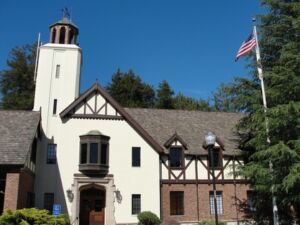
In the latter part of 2025, the Mill Valley City Council, led by then-incoming Mayor Max Perrey, made it clear that the intentions for the City of Mill Valley were bold. That has become increasingly clear in 2026, with Perrey and the rest of the City Council unveiling a Work Plan that spans nearly 60 projects it seeks to accomplish or launch over the next two years. The to-do list includes building a public works complex and multimillion-dollar renovations at the golf course clubhouse and library. It includes creating a recurring “Miller Nights” event series where streets would be closed for music, dining and kids’ activities. The list also includes extending local taxes and raising new revenues, developing affordable housing, updating traffic signals and transit options, making progress on sea-level rise and wildfire protection, further streamlining the permit process and expanding neighborhood and community-wide events.
Read MoreA Major Milestone in Housing Delivery Is Underway in Marin City as Pre-Built Apartments Are installed at 825 Drake Avenue. In the Coming Weeks, Modular Building Sections Will Be Transforming a 5-story pt. building.
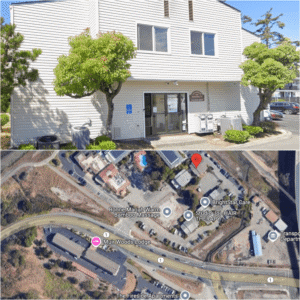
A major milestone in housing delivery is underway in Marin City as pre-built apartments are installed at 825 Drake Avenue. Over the coming weeks, modular building sections will be lifted into place, transforming what is now a foundation into a five-story apartment building. The installation of modular units marks a significant step forward for the 42-unit affordable housing project and reflects a faster, more efficient approach to building housing at a time of urgent need across Marin County. Beginning January 22 and continuing through mid-February, modular units will arrive by truck and be set by crane during daytime construction hours. Construction is scheduled Mondays through Fridays, 7 AM to 6 PM. No weekend work is expected during this phase. Dates are subject to change and may be extended if there are weather delays.
Read MoreEconomic Outlook for 2026 Indicates North Bay at a Crossroads: Economist Robert Eyler Warns of Stagnation, Structural Shifts, Uneven Paths Forward

The North Bay economy is undergoing a profound transition marked by stalled job growth, shifting demographics, housing market stagnation and a wine industry facing long-term restructuring. While the challenges are significant, a noted local economist said opportunities remain — if regional leaders understand the depth of the changes underway and respond with coordinated, realistic strategies. Robert Eyler, an economics professor at Sonoma State University and president of Economic Forensics and Analytics, presented his analysis. Using county-level data, statewide and national trends, he described an economy that is no longer behaving as Californians have historically expected, particularly in regions once seen as beneficiaries of pandemic-era migration. Unprecedented jobs plateau. One of the most striking indicators Eyler presented was California’s prolonged lack of job growth. “We’ve seen about a 24-month period in which we had zero jobs growth in California, which is unprecedented in the recorded history of California’s economy outside of recession,” he said. cross the North Bay, that stagnation shows up in different ways. Sonoma and Marin counties remain below their pre-pandemic labor force levels. Napa County has posted modest gains, while Mendocino County has remained largely flat. “The Bay Area and California economies showed encouraging signs of labor market stabilization in November,” Anderson told the news outlet.
Read More