
Marin Voice: Sausalito City Councilmember Melissa Blaustein and Mill Valley City Councilmember Katherine Mindel Jones Say It Best: Coordinated Transit Plan Shouldn’t Leave Southern Marin Behind
 As elected officials in Southern Marin, we strongly support the goals of the Marin-Sonoma Coordinated Transit Service plan.

Marin Voice: Sausalito City Councilmember Melissa Blaustein (at left) and Mill Valley City Councilmember Katherine Mindel Jones (At Right) Say It Best: Coordinated Transit Plan Shouldn’t Leave Southern Marin Behind.
Consolidating routes, reducing redundancy along the Sonoma-Marin Area Rail Transit corridor, reinvesting those savings in Southern Marin transit, and creating a more efficient regional system are all smart, forward-thinking objectives. However, good intentions do not always yield good outcomes, and, as currently proposed, it appears the changes to bus routes 17 and 71 will leave Southern Marin communities worse off, not better.
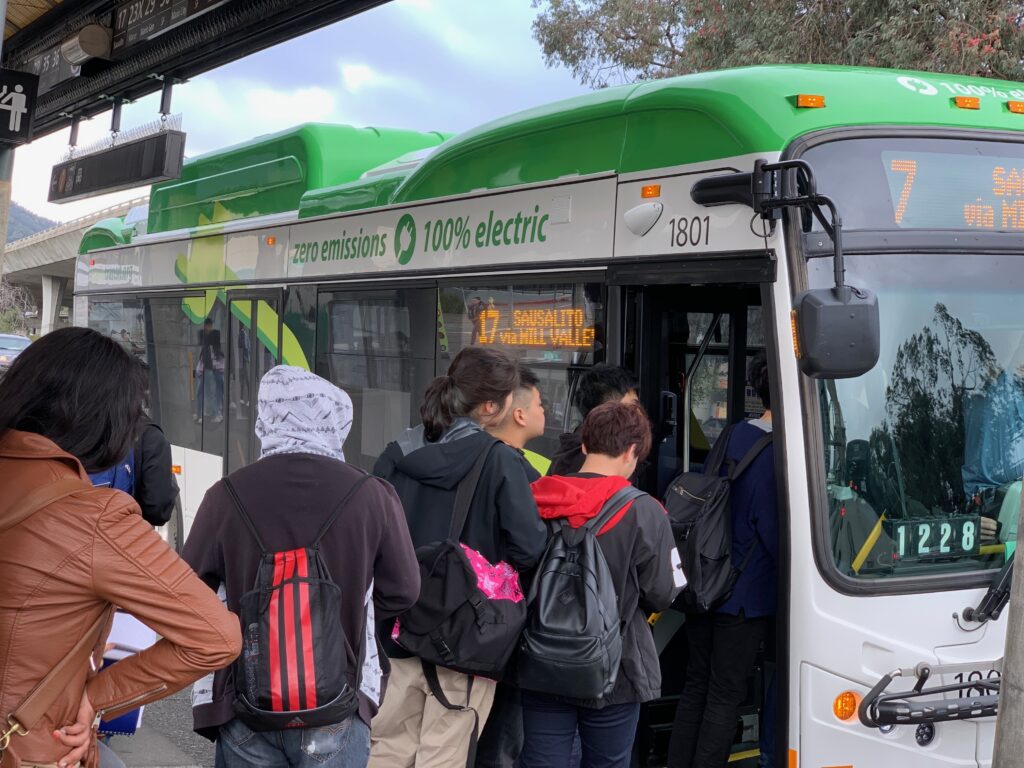
Under the current proposal, Route 17 would terminate in Marin City instead of continuing to Sausalito, requiring a transfer to Route 71 for anyone traveling between Mill Valley and Sausalito. This would eliminate the only direct transit connection between the two cities, sever Mill Valley’s only “one-seat” access to ferry service, and strip local students of a reliable, time-efficient way to get to school.
This is not a minor inconvenience. It is a step backward for climate action and the connected, sustainable communities Marin has long aspired to build. Transportation remains the single largest source of greenhouse gas emissions in Marin County. If we are serious about meeting our climate goals, we must make public transit a practical and appealing alternative to driving. That means offering service that is convenient, reliable, affordable and, most importantly, competitive with car travel times.
The Mill Valley-Sausalito corridor is exactly where the transit plan should be investing in better service, not reducing it. The Transportation Authority of Marin’s own planning documents identify this corridor as a “priority development area” for future housing, where residents will need sustainable transportation options. Cutting direct service before these residents even arrive sends the wrong message about Marin’s commitment to reducing car dependency and supporting climate-friendly growth.
 At present, Route 17 provides Mill Valley residents with a seamless connection to the Sausalito ferry terminal, offering a realistic car-free commute to San Francisco. Eliminating that link would force passengers to transfer, adding time, uncertainty and complexity to a trip that should be simple. Every additional transfer is another reason a commuter chooses to drive instead.
There is also an immediate and very human impact to consider: high school students. Sausalito does not offer public school bus service. Route 17 is the only way for Sausalito students to reach Tamalpais High School in Mill Valley.
Under the proposed plan, these students would have to transfer in Marin City, turning what is now a straightforward commute into a logistical challenge. We suspect that parents will understandably choose to drive their children instead, putting more cars on the road, increasing congestion during peak hours and undercutting Marin’s climate and safety goals. It’s precisely the outcome that good transit planning is meant to avoid.
Mill Valley is the third-largest city in Marin County and the largest south of San Rafael. Unlike other Marin cities, Mill Valley and Sausalito both lack access to SMART. Mill Valley has access to neither rail nor ferry service. Sausalito is home to the ferry and proud to connect its Southern Marin neighbors with easy access to San Francisco as a local transit hub.
Without Mill Valley’s direct bus to the ferry, we are weakening an already limited network that will isolate residents, reduce mobility for those without cars and undermine regional transit equity.
The fix is straightforward. Keep Route 17 operating as it does today, maintaining the vital connection between Mill Valley, Marin City and Sausalito. At the same time, add off-peak service on Route 114 between Mill Valley and San Francisco so that our residents enjoy the same frequency improvements being offered elsewhere. These two changes would genuinely advance the plan’s core goals — growing ridership, enhancing regional connectivity and building a more resilient, coordinated system.
To be clear: we support the vision behind the coordinated transit plan. Coordinating service between agencies, eliminating redundancy and improving efficiency are important and necessary goals. But the current proposal contradicts TAM’s own long-term vision of better, more frequent service between Mill Valley and Sausalito. We can do better.