
Marin Voice: We Can No Longer Afford to Find Reasons to Delay Housing
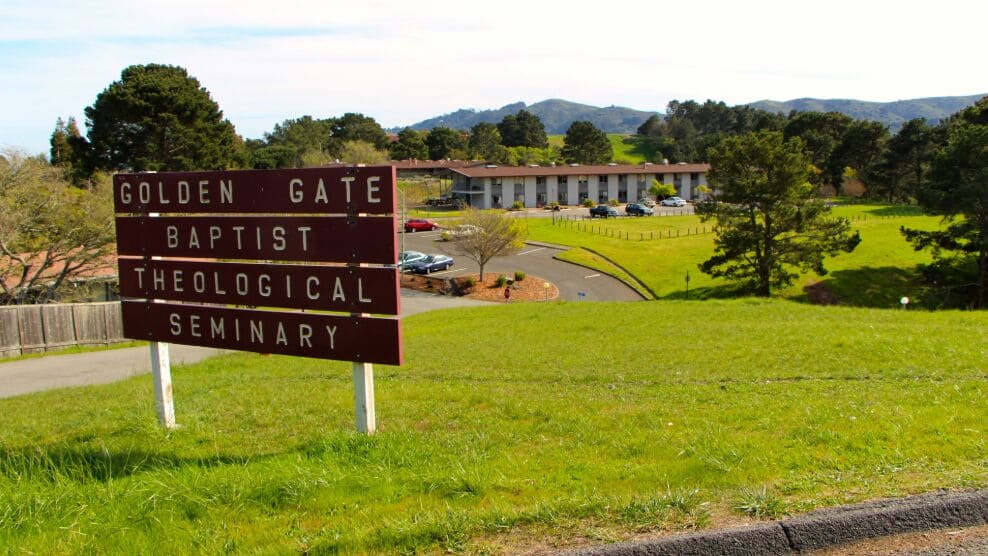
For more than a decade, a 127-acre hilltop former seminary campus in the Strawberry area near Mill Valley has been the star of an ongoing redevelopment fight.
In 2015, the land was proposed as a new campus for The Branson School, where I am a student in my senior year. After two years of review, the proposal was eventually rejected by the Strawberry Design Review Board (there’s still a “No Branson” campaign poster on a classroom wall here in Ross).
The site got reworked into a housing plan around 2020, which replaces 139 units with 323 new apartments, a 150-unit senior care center, a daycare, significant park space and other public facilities. Seventy of the apartments are set aside as below market rate.
The Seminary Neighborhood Association has been opposed to aspects of the project. It recently settled with the developer and dropped its resistance to the plan after years of circumspection. Consequently, the Marin County Board of Supervisors unanimously approved the redevelopment plan in June. Yet opposition didn’t end there: in July, a new group called Strawberry Residents for Sensible Development sued to block it. Their complaint centers on 40 market-rate units near the Chapel Hill ridgeline permitted using a density bonus waiver.
The plaintiffs argue these 40 units distributed among 25 buildings override the Strawberry Community Plan’s future development laws. According to their lawsuit, they are “effectively blocking views of the bay from many vantage points.” This seems to be precisely the dispute the lengthy approval process and settlement were supposed to resolve. So why didn’t it? If the lawsuit succeeds, the project and its impact will only get further delayed
I’ve heard about this site getting proposed and fought over since I was in first grade. It’s unfortunately not alone among delayed sites. Major housing projects in Marin frequently draw objections and the fights over permits stretch on for years.
My graduating class will head off to college and the workforce soon, and those who stay here are going to need somewhere to live. In an era where prices keep rising, more housing might enable that.
If the concept of “supply and demand” isn’t enough to conclude this project could ease pressure on our small housing supply, research has found that for every 100 new market-rate units built, the equivalent of roughly 70 units become available for people earning below the area’s median income to occupy through filtering.
While a Stanford University study of the Bay Area says the benefits of a new housing project mostly reach people who are already affluent, they call for pairing market-rate housing with real investment in subsidized units, like the 70 planned at the Seminary. Put two and two together: this project should have a positive effect on the cost of housing in southern Marin. But it will only make an impact if it’s built in the first place.
That’s why our state assigns housing targets as a carrot-and-stick approach to try and incentivise development. Our county and its towns are now required by state regulation to plan and zone for (though not necessarily construct) 14,405 units before February 2031. If these numbers are missed, it could trigger a streamlining law, where developers won’t have to engage with neighborhood groups or need public hearings for projects like these.
Considering we’ve permitted roughly 6% of “very-low income” units and 9% of the “moderate income” ones, the same local control that groups like Strawberry Residents for Sensible Development are suing to protect is exactly what Marin risks losing across every future project over the next decade.
None of this is about zoning maps though, it’s about whether people like me can come back and have a place here. Growing up, Marin felt like a perfect world, and it really is quite spectacular. Why would many people my age choose to leave? But the reality of prices here means many of us won’t come back unless something changes. I suspect the state law won’t. As a result, when the choice is between perfectly preserving our home’s character or protecting the very people who are part of our community, my choice is obvious.
So yes, the Strawberry seminary project isn’t perfect. Perhaps those 40 units tied up in litigation should be built somewhere else. Perhaps they could demolish less of the existing complex’s occupied apartments. But the project survived over a decade of hearings, a settlement, a unanimous vote from our elected county officials and still delivers 70 below-market-rate homes. Marin can keep handing every new group a chance to relitigate projects from scratch, or it can start saying yes to change before the choice gets made for us.
Noah Goldman, of Tiburon, is a student at The Branson School in Ross.
He is a co-founder of Marin Youth for Housing action group.