
MarinIJ: New California ‘Zone 0’ rules require fire-safe buffers around high-risk homes
It’s unclear how the changes will effect home insurance policies.
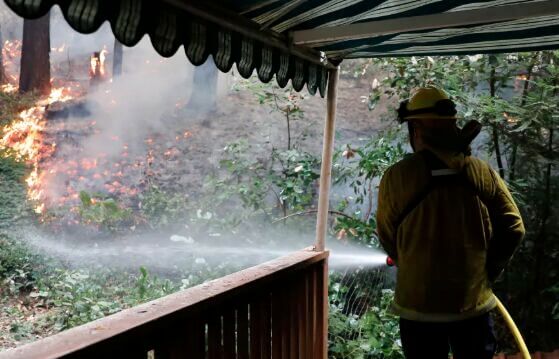
California homeowners in designated high-risk fire areas will have to clear vegetation and other combustible material from around their homes, then make more extensive landscaping and structural changes over the next five years under regulations approved unanimously Wednesday.
The rules come after years of delay and fractious debates over affordability, landscaping and fire risk. The proposal passed by the Board of Forestry and Fire Protection still needs a state review that officials said would be completed between Sept. 2 and Sept. 7. A five-day public-comment period is to follow before the rules go into effect. Any changes made by the board in response to public comments may trigger a requirement for further comment before passage of the regulations.
Santa Clara County FireSafe Council CEO Seth Schalet said the regulations could become effective by the end of September.
Homeowners would have to comply in two phases. In the first three years, flammable materials like leaves, mulch and dead plants would have to be removed from 5 feet around homes. Within five years, areas right next to homes would have to be cleared of all vegetation, with some exceptions. Wooden fences would not be able to connect directly to homes, and nearby trees would need to be limbed and trimmed.
Wildfire experts in recent years have highlighted the dangers of wind-driven embers that can travel great distances and ignite flammable materials on and around homes. State legislators voted for the creation of the regulations more than five years ago as California was reeling from massive wildfires in 2020 that razed thousands of homes and killed 31 people. Lawmakers required the creation of an “ember-resistant” area, known as Zone 0, immediately around homes.
But the rule-making process has been plagued by delays and public uproar over costs of compliance and potential loss of valued landscape vegetation, trees and amenities.
The proposal passed by the Board of Forestry applies to homeowners living in rural areas under state responsibility, and residents of “very high fire hazard severity areas” in local-responsibility areas, including much of the Berkeley and Oakland hills.
While the goal of the rules is to reduce fire risk to houses, it’s unclear if compliance will reduce home insurance costs, which have skyrocketed in some areas. Schalet called that “the $64,000 question.”
“There’s no unified way that insurance companies deal with this,” Schalet said. “You may find that you are in full compliance with Zone 0 and an insurance company can still un-renew you or deny you for multiple other reasons.”
Mark Sektnan, vice-president of the American Property Casualty Insurance Association, called the regulations “a minimum standard.” Sektnan noted that insurers have widely supported Insurance Institute for Business & Home Safety standards that are stricter than Zone 0 and don’t allow vegetation or trees within five feet of homes.
Insurers also look favorably on neighborhoods that undertake community-level hardening against fire, Sektnan said.
“Neighbors need to do this together,” Sektnan said.
How many Bay Area homes would be affected is unclear. About 2 million homes in California would fall under the regulations, including 9,000 to 10,000 in Santa Clara County, Schalet said. Homes in very high fire severity zones in Santa Clara County, falling under the county fire department’s jurisdiction, number 2,763. Santa Clara County Fire Department battalion chief Matt James said the regulations would not affect the department’s staffing or other resources because it has been inspecting those properties already for several years.
“Change is never easy,” board chairman Terry O’Brien said before the vote Wednesday. “Many believe the regulations are too draconian, and others believe that we have not gone far enough.”
Fines would start at $100, but local fire agencies are expected to have discretion over penalties.
“The emphasis on the part of all the fire professionals will be on education and working with the public to implement the regulations,” O’Brien said.
It was not immediately clear what appeal process might apply to fines and authorities’ compliance decisions.
Oakland Fire Department assistant fire marshal Javan Smith said Zone 0 inspections would be done under a process already in place that includes inspecting 25,000 homes in fire-risk areas. The department does not plan to issue fines for Zone 0 non-compliance, and will continue to lean heavily on educating homeowners, he said. However, if a non-compliant property requires re-inspection, a fee of around $300 would be levied, Smith said.
Officials hope the five-year implementation window helps property owners prepare for the rules.
“The goal is to give homeowners time, resources, and guidance to make changes effectively and affordably,” the board said in a summary of the proposed regulations, which come as climate change has made large wildfires in California more frequent.
Dave Lefkowith, president of Los Angeles community group the Mandeville Canyon Association, said the regulations would force millions of Californians to pay thousands of dollars each, resulting in billions of dollars in costs.
“Imposing this unsupportable financial burden over 3 to 5 years makes it no more palatable,” Lefkowith said.
A few bills in the California Legislature propose to help homeowners create defensible space around homes, but, Schalet said, “There’s not enough funding either from the state or the feds that’s been publicly made available.”
In the first three years, combustible materials like firewood, dead leaves, branches, mulch and wood chips would have to be cleared 5 feet from around homes. Trees would need trimming, gutters would need cleaning and dead or dying plants would have to be removed.
Within five years — with local jurisdictions setting specific timelines — homeowners would have to clear all vegetation from within a foot of a home, or out to the edge of the drip line under eaves if that’s a greater distance. Plants would also have to be cleared from within 2 feet of windows, doors and vents, and from within 5 feet of attached decks and similar features.