
Marin IJ: Marin Agency Plans Extensive Traffic Signal Upgrades
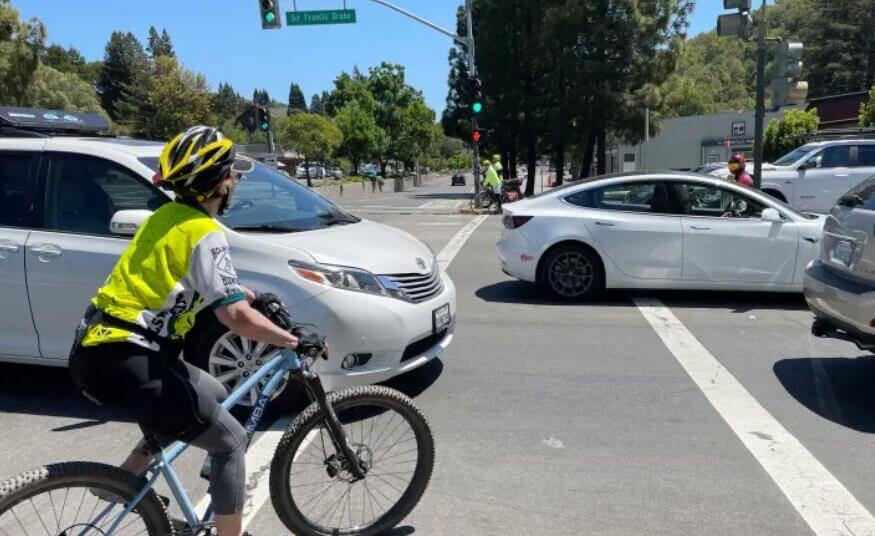
Nearly two-thirds of the traffic signals in Marin County transit corridors lack the technology to be controlled remotely, and more than half are incapable of syncing the timing between them, according to a draft study.
Of the 234 intersections in the study area, about one-third of the signals do not have battery backup, more than half lack emergency vehicle override technology and 94% are not equipped with camera monitoring. More than half are nearing their expiration, the report says.
The findings demonstrate the need for a countywide traffic signal modernization plan, officials at the Transportation Authority of Marin said.
For the past year, the agency has been collecting data to develop such a plan, which officials say will put them in a better position for project funding. The plan will bring all of Marin’s jurisdictions together, including Caltrans, which owns 37 intersections controlled by signals in Marin, and transit agencies, said Brian Sowers, a consulting project manager.
“The goals of the program are to improve transit reliability and operations through technologies,” Sowers said. “We’ll be looking at updating and improving the currently fragmented and outdated traffic signal infrastructure along major transit corridors throughout the county.”
Sowers said the plan aims to upgrade traffic signals to prioritize transit; enable emergency vehicles to preempt lights; and make safety improvements for bicyclists, pedestrians and vulnerable road users. The updates will reduce long-term maintenance costs and set up the county for future technologies, he said.
The Transportation Authority of Marin embarked on the planning effort last fall with support from a $500,000 grant from the Metropolitan Transportation Commission.
While Contra Costa and San Mateo counties have done traffic signal upgrade projects, the countywide effort in Marin is the first of its kind in the Bay Area, planning officials said.
The first part involved the conditions report, which includes an inventory of the infrastructure and areas where the system is lacking. Planners presented the draft findings to the Transportation Authority of Marin board at its meeting on July 23.
Next, planners will finalize the report and develop a framework for coordinated signal operations and a phased project rollout. Then staffers will seek funding and prioritize projects.
The final report is expected to be completed in May, Sowers said.
“This is really exciting, but also rather daunting to see that more than 58% of our signals are not operating at their best potential,” said Melissa Blaustein, a member of the agency board and the Sausalito City Council.
Blaustein asked staff whether the lack of video monitors and backup batteries is prompting any immediate response, or whether improvements will wait until the report is complete and recommendations approved.
“We don’t want everybody to rush out and do anything independently,” said Derek McGill, planning manager at TAM. He said the project team wants “to work on a framework and a schedule to coordinate improvements.”
McGill said that once a technical report is released, the agency will invite and review public comments for a final plan.
Board member Urban Carmel, a Mill Valley City Council member, asked when construction would start.
“It is going to depend on funding,” Sowers said.
McGill said the agency is looking at grant programs offered by the Metropolitan Transportation Commission, so timing on construction is dependent upon grant availability.
“My sense is, there’s going to be some grants, but a lot of this may be incremental change,” said board member Mary Sackett, a Marin County supervisor.
Because of that, Sackett said, “Let’s take opportunities when things fail or break to bring them up to the right spot.”
McGill said staff will look at making recommendations for replacing equipment, but not all replacements automatically trigger an opportunity to upgrade equipment.
For example, some technologies, such as vehicle detection, require hardwiring beneath the pavement. It’s a costly project that involves more planning, engineering and time than a simple swap-out, he said.
San Rafael Mayor Kate Colin, chair of the TAM board, said modernizing traffic signals “is an important investment.”
“I’m especially proud that this signal modernization effort is the first of its kind in the entire Bay Area,” Colin said. “By bringing together our local cities, the county, Caltrans and transit agencies, we can make the system work more seamlessly for all roadway users. This is exactly the kind of forward-looking regional coordination TAM should be leading.”