
MarinIJ: Marin Transit Approves $6M Contract for Bus Yard Project
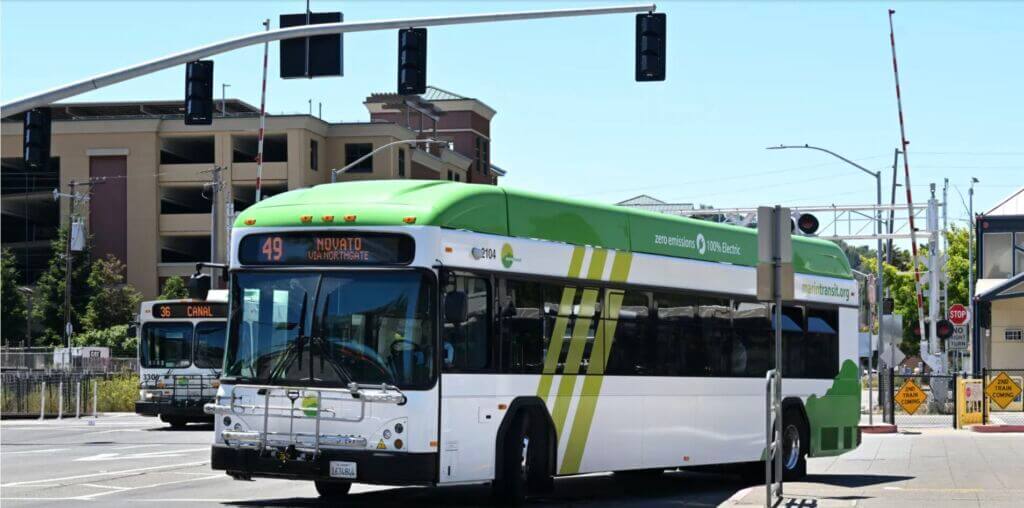
Marin Transit has hired a contractor to finalize the design of its electric bus yard proposed for San Rafael.
The agency’s board voted unanimously on June 1 to award a $6 million contract to HDR, an engineering firm, to come up with the look and feel of the operations center. The 3.5-acre site is at 1075 Francisco Blvd. East.
HDR was selected from a group of nine applicants.
“They have great experience,” project manager Paul Haifley said of the contractor team. “They helped us refine the scope very definitively and are ready to hit the ground running on this project.”
The project is part of a plan to electrify the bus fleet by 2040 to meet a state mandate. Supported by a $31.5 million federal grant, Marin Transit purchased the lot for $14 million in 2024, hoping it would become the new electric bus hub.
The plan calls for an operations center that includes five bus maintenance bays, a bus wash, 49 bus parking and charging stalls and 57 employee parking spaces. It also includes office space, break rooms and storage.
In January, the board approved an environmental analysis that satisfied the requirements set by the California Environmental Quality Act.
The environmental assessment included technical studies on air quality, traffic, cultural and tribal resources, noise and vibration and geology and soils. The assessment included several mitigation measures to reduce the potential impacts of the project to less than significant for all categories except traffic. The report determined that the traffic impacts were negligible.
In April, the Federal Transit Administration affirmed that the analysis also met the standards of the National Environmental Policy Act.
That approval set the stage for the agency to begin prepping the site. The property sits on soft bay mud that needs to undergo surcharging, a process to compact and settle the soil before construction of a new bus facility can happen.
In May, the board approved a $1.6 million contract for the work, which is expected to begin by the end of this month and wrap up by the end of the year.
Regarding the design contract, Haifley said the project bid came in over the $4 million estimate. However, the contract includes a solar canopy with photovoltaic panels and battery storage, a package that added about $1 million to the scope of work. HDR is also providing a level of expertise that staff determined was an asset to the project development, Haifley said.
The firm will be part of a community engagement process to gather comment from the public. Planners especially need comments on non-transit amenities that could be at the site, including a potential electric vehicle carshare, sidewalk and lighting improvements, a food truck and other potential perks.
Marin County Supervisor Eric Lucan, a Marin Transit board member, asked staff to provide information about communications with Pacific Gas & Electric Co. Specifically, he is interested in rates for charging its electric vehicles now compared to what rates would be with the new technology planned for the site.
“I know you’re in active communication with them, but how is that conversation going right now, and are we confident in their ability to deliver, or is there additional work that we might need to be aware of as a board?” he said.
Staff said they’ll have regular check-ins to ensure they’re on the same page.
San Rafael Councilmember Maribeth Bushey, a board member, had a question about the surcharging work expected to begin this month.
“Can you confirm that you’re cooperating with the city of San Rafael and adhering to our construction management practices and schedules?” she asked staff.
Haifley said Marin Transit staff are in close communications with the city staffers, and they’re working with contractors on finalizing items such as encroachment permits.
“I’ll make it a point to keep this board updated on all that construction schedule so we’re fully aware,” said Robert Betts, general manager of Marin Transit.
Design and community engagement are expected to kick off this month and continue through the end of 2027. If the design is approved, the hub could be under construction by June 2028 and operational in 2030.
The design contract approval required a budget amendment of $3.3 million.
The design contract approval required a budget amendment of $3.3 million.