
Marin-Sonoma Bike-Sharing Program Extended for 3 Years
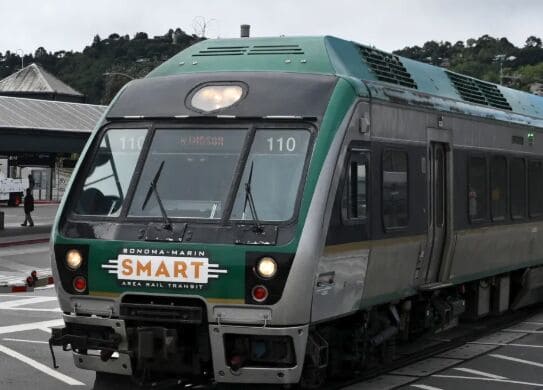
A bike-sharing program in Marin and Sonoma counties is receiving an infusion of more than $2 million for a three-year extension and expansion plan.
North Bay officials have approved a combined $1.39 million in local and regional funds to extend the Redwood Bikeshare project, which was set to end next month. Additionally, Sen. Mike McGuire, a Democrat from Sonoma County, has secured a $1 million earmark in the state budget to support an expansion of the program.
The Redwood Bikeshare program launched in 2024 as a two-year pilot project offering 300 pedal-assisted e-bikes at 60 parking hubs along the Sonoma-Marin Area Rail Transit corridor. The program was designed to help SMART riders get to and from their destinations.
“This is a major win for SMART passengers,” McGuire said. “Redwood Bikeshare is helping make the SMART system even more accessible, allowing riders to hop off the train and jump on an e-bike to head home, go to work or run errands. This investment means more bikes at stations, more connections and a lot more convenience.”
Sonoma County Supervisor Chris Coursey, chair of the SMART board, said the rail agency’s 26% year-over-year ridership growth has been boosted by Redwood Bikeshare.
“Over the past two years, Redwood Bikeshare has become an important part of our regional transportation network, particularly when combined with SMART’s rail service,” Coursey said.
The Transportation Authority of Marin, or TAM, approved its $412,500 share toward the project at its meeting on Sept. 24.
The Sonoma County Transportation and Climate Authorities are contributing the same amount; the Metropolitan Transportation Commission is funding $498,250; and SMART is spending $75,000 on the program.
The program extension renews a contract with Drop Mobility as the bike-sharing service provider. The Sonoma County Transportation and Climate Authorities is overseeing the contract.
Scott McDonald, a planner at TAM, said its contribution is coming from a Measure AA sales tax revenue fund dedicated toward expanding access to ferries and regional transit.
The funding category was amended this year to specifically list “shared mobility services” and new transit connections, such as bike-share programs, as eligible recipients of the funding, he said.
TAM recommended funding the extension because the program provides “first and last mile” options to regional transit, including to SMART, ferry and bus hubs, McDonald said. The program also supports reducing vehicle trips and greenhouse gas emissions, and it offers a low-cost alternative to driving, he said.
“And although the trips within the bike-share program are relatively short, they could extend the reach of transit, and complement trips on transit that are relatively long, including SMART service,” he said.
Through August, there have been 28,000 recorded trips, with 4,900 unique riders. A typical trip is about 12 minutes long and about 1.7 miles.
Santa Rosa has recorded the highest use with more than 7,700 trips. San Rafael is second with 5,315 trips.
In Marin, the Larkspur SMART station and Larkspur ferry terminal are the top two sites for trip starts using the bike rentals. The San Rafael Transit Center and the Larkspur SMART station are the top two destinations to end trips.
The bikes can be reserved, unlocked and rented using an app. It costs $1 to unlock a bike and 25 cents a minute for pay-as-you-go riders.
Memberships cost $20 a month. Perks include a waived unlocking fee and 30 minutes of free riding time per day before the 25-cent rate kicks in.
McDonald said the program has been growing since April, when the daily minutes allowed for members on a bike was expanded from 30 minutes to an hour.
The service also has an equity membership option that offers the same perks as the standard membership but a discounted rate of $5 a month. These memberships are available to people enrolled in programs such as CalFresh and Medicaid.
Partnerships with the nonprofit Canal Alliance and MCE to market the bike-sharing program also have helped growth, McDonald said.
At the TAM board meeting, Yoav Schlesinger, the San Anselmo Town Council’s representative, said that in future presentations he wants to see more data points, including the number of trips per rider and the public subsidy per trip. Schlesinger said that cost is important for decision-makers to understand.
McDonald said TAM’s portion of the subsidy is about $11 per trip, but the total cost is higher.
Sausalito Councilmember Melissa Blaustein, a TAM board member, said the agency is drawing money for the bike share program from the same funding category that is meant to support mobility options to and from transit hubs in Tiburon, Sausalito and potentially Mill Valley.
“We’re not leaving any funding for something like micromobility in Sausalito and Tiburon between the ferries or serving the ferries or any of the Southern Marin transit spots,” she said.
She said she wants the board to consider options for a bike-sharing program or something similar in Southern Marin. She suggested that maybe the $1 million secured for the expansion plan can support that.
Blaustein said she is concerned that the approval commits about 90% of the fund toward the Redwood Bikeshare, which operates only as far south as Larkspur.
“We’re not leaving any funding for something like micromobility in Sausalito and Tiburon between the ferries or serving the ferries or any of the Southern Marin transit spots,” she said.
She said she wants the board to consider options for a bike-sharing program or something similar in Southern Marin. She suggested that maybe the $1 million secured for the expansion plan can support that.
Similarly, Mill Valley Councilmember Urban Carmel said Southern Marin officials are interested in the program, and so far their communities haven’t been able to participate.
Carmel said a bike-sharing program could serve the triangle between Mill Valley, the Tiburon ferry and the Sausalito ferry. It also could serve the Mill Valley-Sausalito Multiuse Path and the Manzanita commuter lot.
“So I do think that this board should probably think a little bit about how we can bring everybody into the fold on this program going forward,” he said.
Regarding the $1 million state earmark from McGuire, planners are still determining when the money can be secured and how it can be used, McDonald said.
Anne Richman, general manager of TAM, said there could be an opportunity for conversations on bike-sharing or other micromobility options in Southern Marin.