
MarinIJ: Transportation Authority of Marin to Upgrade Hubs for Ferries, Trains
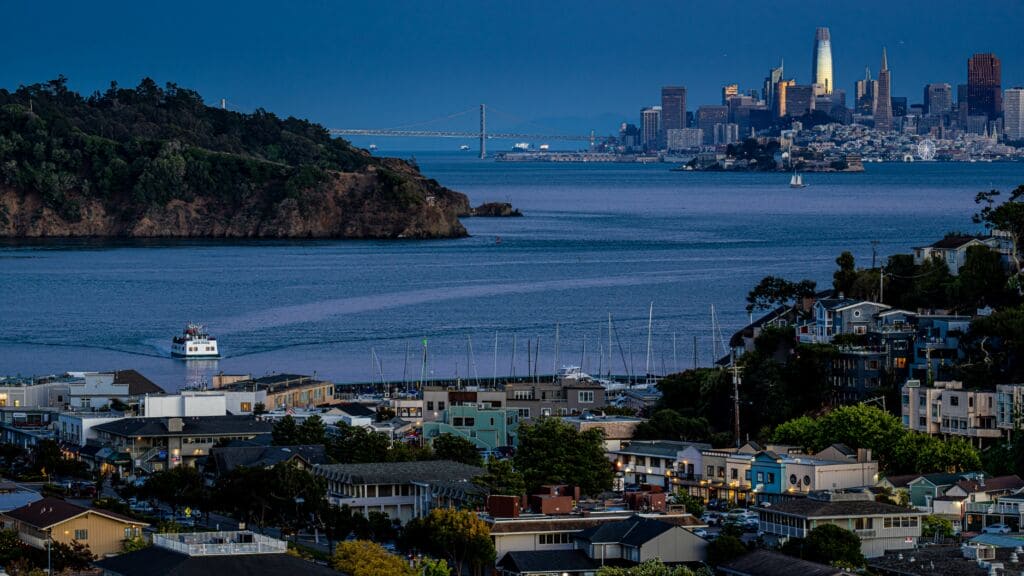
The Transportation Authority of Marin is preparing to launch a plan to improve how people interact with major transit hubs.
The plan recommends ways — such as bike repair stations, relocated bus stops, bike and pedestrian improvements and electric vehicle charging sites — to enhance connectivity and experiences. It includes the ferry terminals in Larkspur, Sausalito and Tiburon, and the six rail stations in Novato, San Rafael and Larkspur.
The agency’s board voted unanimously to adopt the document, called the “Marin County Mobility Hub Plan,” at its meeting on Sept. 24.
“The real value of the mobility hub plan is that it gives us a thoughtful planning framework for each location,” said San Rafael Mayor Kate Colin, chair of the Transportation Authority of Marin board.
“Every hub is different, with its own constraints and opportunities, and this plan brings all of those factors together — transit, walking and biking connections, access, safety and amenities — so we can make smart, coordinated decisions about future improvements,” Colin said.
The agency received a $400,000 grant from the Metropolitan Transportation Commission, or MTC, to produce the report, said Derek McGill, director of planning for the Transportation Authority of Marin.
One of the goals is to support local compliance with MTC’s regional transit-oriented community policy. The policy, which in part aims to improve access to transit, applies to cities with rail or ferry stations, McGill said.
The plan proposes some conceptual projects that total millions of dollars. Adopting the plan places the county in a better position to fine-tune projects with each local jurisdiction and to seek grant funding opportunities, McGill said.
The recommended project lists are similar at stations across the county. Bicycle and pedestrian upgrades include medians, high-visibility crosswalks, curb bulb-outs at intersections, bike ramps and bike markings on roads, among other improvements.
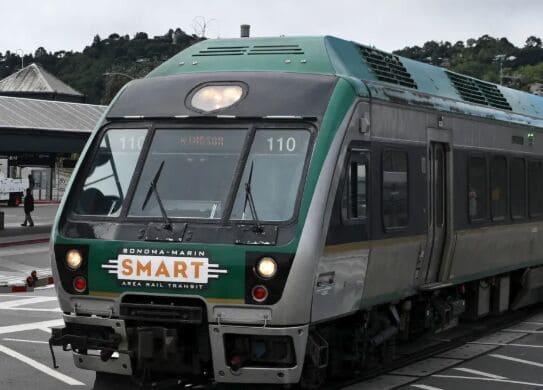
The plan also recommends other enhancements such as bus shelters, benches and signs. Several of the stations should also have bike lockers, bike repair stations, electric vehicle and e-bike charging, Wi-Fi, new lighting and landscaping, among other amenities, the plan says.
The plan includes some site-specific recommendations, too.
Around the San Marin SMART station, the plan proposes pedestrian improvements on Rush Landing Road and Redwood Boulevard; a new station entry from Rush Landing Road; and a solar canopy over the parking lot.
The plan proposes a multiuse path at the northern end of the downtown Novato SMART station, a pickup and drop-off area on Grant Avenue and a proposed mobility hub with a landscaped gathering space and other upgrades.
At the Marin Civic Center SMART station, the plan recommends relocating the bikeshare and bike racks; real-time transit signs at the Civic Center Drive bus stop; new landscaping along Civic Center Drive; and a pickup and drop-off area on Merrydale Road.
The plan recommends improvements at the Larkspur SMART station to include sidewalk, landscaping and curb ramp rehabilitation on Larkspur Landing Road; a new bus stop on Highway 101; and a solar canopy at the parking lot.
At the ferry terminal in Sausalito, the plan recommends closing gaps in the bike network, specifically along Bridgeway, and making crossings safer for pedestrians. It also proposes relocating Golden Gate Transit bus stops and upgrading Marin Transit bus stops with shelters.
In Tiburon, the plan discusses proposed improvements such as enhancing pedestrian crossings, increasing bus stop visibility and improving signs for navigation between bus stops and the ferry.
Tiburon Councilmember Alice Fredericks, a Transportation Authority of Marin board member, said there are general concerns about access to ferries in southern Marin.
“To really create a useful mobility hub in Tiburon … people have to get to that mobility center,” she said.
Fredericks said parking is challenging at the Tiburon ferry dock and there is no easy way for residents in the hilly neighborhoods to get to a bus stop for a trip to the ferry launch.
“While I really appreciate that there is a need to improve what is at the mobility hub itself, we really need to address how to get people there,” Fredericks said, noting that ridership on the Tiburon ferry is still below pre-pandemic levels.
“One of the hardest things is behavioral change,” Fredericks said. “And how to get people to connect with each other and carshare to get to public transportation is a hard problem to solve.”
McGill said that while the planning team recognized gaps in access to the terminal, it was unable to identify specific improvements. He said the staff is willing to continue engagement with the community about that.
The next steps involve seeking approval from each of the jurisdictions named in the report, McGill said. That approval could include adopting the plan or incorporating the recommendations in the capital improvements programs or other plans.
The plan is available at bit.ly/4yCDZv6.