
The Mill Valley City Council Unanimously Mill Approved a Series of Zoning Code Updates on June 1st That Officials Hope Will Lure Developers
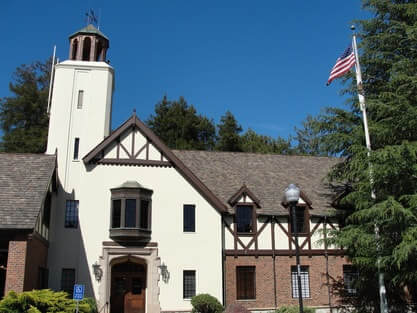
Mill Valley has updated its affordable housing regulations to encourage small-scale projects.
The actions include raising the threshold at which developers must include an affordable dwelling from four residences to seven. For projects of seven or more residences, the city is requiring 15% be affordable, in contrast to 25% before. It is also waiving fees for projects with two to six dwellings. And it is removing restrictions on apartments of less than 450 square feet.
“I love this and I think it’s great,” said Michael Heacock, a local architect, during the public comment period. “It’s so much better than what we had.”

“Simplification and certainty are going to go so far with the one or two or three developers that may propose a project over the next 10 years,” he said. “We need to do everything we can to help incentivize them.”
Jeff Dougherty, a developer who lives in Mill Valley, said the actions mean developers won’t only push for bigger projects.
“Keeping the affordable threshold actually lower might result and incentivize the types of projects we want to see in our community,” he said.
The comments came after a presentation about the city’s affordable housing requirements and options to streamline and modify them.
Mill Valley adopted inclusionary zoning in 1982, which requires developers to build a percentage of residences for lower-income households.
In 2018, the city lowered the project size threshold for including affordable dwellings from 10 to four, and required 25% be affordable.
Mill Valley has 39 “inclusionary” residences, a staff report said. Another 32 “affordable” ones were built as part of other projects.
During their discussion, council members said staff and planning commissioners heeded the concerns of developers.
“It’s important to say that we’re not trying to extract maximum fee revenue and things like that,” Councilmember Stephen Burke said.
“One reason we can do this and begin to streamline and reduce fees and burdens … is the fiscal strength of Mill Valley,” he said.
“I was on the Planning Commission in 2018 when we lowered it from 10 to four,” Councilmember Urban Carmel said.
“It didn’t work,” he said, referring to the stricter inclusionary requirement. “You learn and I’m happy we’re pivoting.”
“I think the huge win here … are the micro-units,” Burke said. “Three percent of our rental stock is studios; 57 units are studios, which rent for under $2,000 a month. So they are basically within the income range of most of the people we are seeking to address.”
“I do feel like we are chasing that sweet spot and I don’t know where it is necessarily, and I don’t think anybody does, actually,” Vice Mayor Caroline Joachim said.
“We may not be the actual obstacle in all of this,” she said. “We’re still trying to figure out what incentivizes the units.”